


Cold War press sparked global lab-grown diamond industry
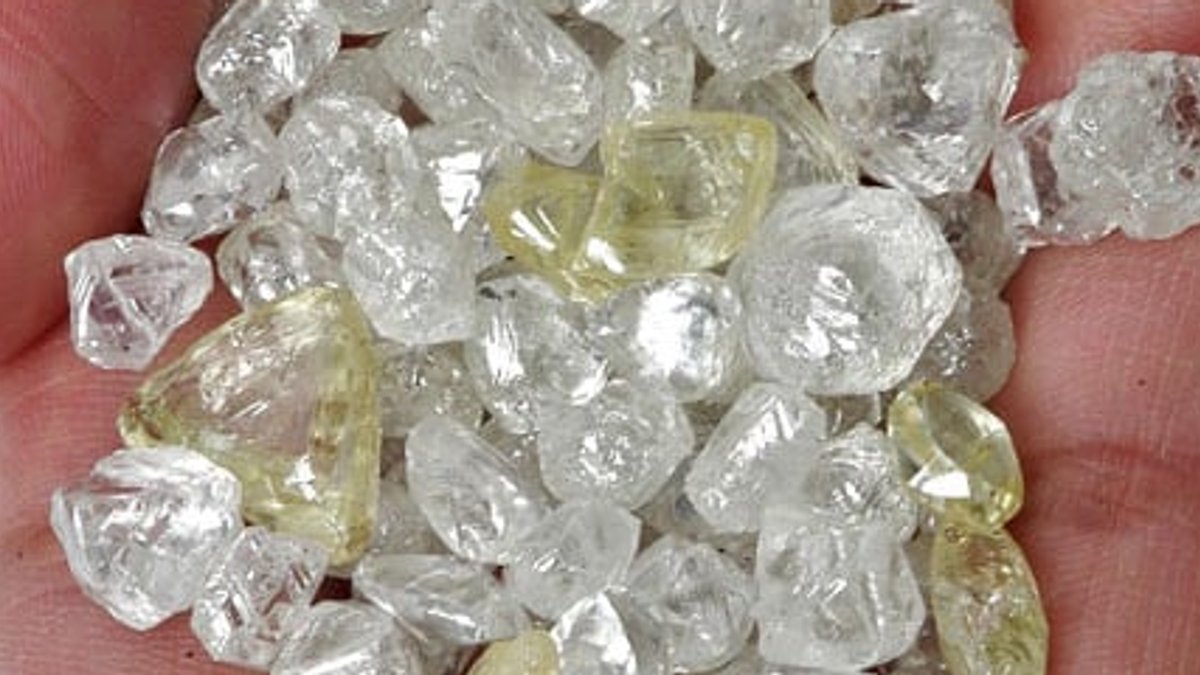
Lab-grown diamonds have moved from industrial abrasives to a global market that now challenges the traditional mining sector. The technology traces back to a 1954 General Electric experiment that produced synthetic diamonds for cutting tools, a fact that set the stage for later breakthroughs.
Cold-War roots of the gemstone press
In the 1980s, a team of Russian scientists in Novosibirsk engineered a compact high-pressure, high-temperature (HPHT) press capable of producing gem-quality stones at a fraction of the cost of mining. After the Soviet Union collapsed, the equipment entered a chaotic market, attracting foreign entrepreneurs.
Retired U.S. Army Brigadier General Carter Clarke traveled to Moscow in 1995 seeking an anti-theft ink for his Florida security firm. A Russian contact redirected him to an explosives factory, where a scientist displayed the HPHT press—a steel chamber roughly the size of a household washing machine. Clarke returned with cash and ordered machines for shipment to Sarasota, Florida, laying the foundation for Gemesis, founded the following year.
From coloured curiosities to mass-produced gems
Early presses yielded small brown crystals with low yields. Clarke recruited Reza Abbaschian, chair of materials science at the University of Florida, to collaborate with Russian engineers. By 1999 the team had grown more than 230 crystals, the largest measuring 1.6 carats, and in 2002 Gemesis began selling its first gem-quality coloured diamonds, focusing on yellow and orange hues that filled a niche market.
Stephen Lux, who had previously led an $800 million pigments division, became CEO in 2006. He warned that the company was too small to alarm De Beers and that prices would not collapse because of the heavy research investment. At that time Gemesis operated hundreds of presses in a Sarasota warehouse, producing about half a carat a day and selling tens of thousands of carats annually at roughly one-fifth the price of mined stones.
Related Post: De Beers Merges Sights as Diamond Prices Fall
Lux’s caution proved misplaced. In November 2010 Gemesis shifted to colourless diamonds using chemical vapour deposition (CVD) and moved production to southeast Asia, claiming “thousands of carats a month” at $3,000-$5,000 per carat. Financial strain led to a bankruptcy filing, after which Indian diamantaire Jatin Mehta acquired the company for $8.4 million and relocated operations to Malaysia. By 2014 the firm was renamed Pure Grown Diamonds and no longer grew any stones itself.
Wholesale prices for lab-grown stones have since dropped about 90 percent, prompting De Beers to shut its Lightbox brand in 2025. Anglo American wrote down De Beers’s value from $9.2 billion in 2023 to $2.3 billion in early 2026 and announced a sale of its 85 percent stake. On 9 November 2026 Botswana’s president named the Global Diamond Consortium, led by former De Beers chief Gareth Penny, as the winning bidder, with Botswana increasing its share to 30 percent.
A secretive debut
Inside a plush Mayfair suite, a modest orange gem rested in a clear container, its hue catching the low light of the hotel corridor. The stone arrived as part of a discreet gathering of investors and industry insiders, far from the glitter of nearby luxury boutiques.
Industry realignment
Within a few years, the enterprise shifted its focus to colourless stones generated through a vapor-phase technique. Production moved to a Southeast Asian facility, where output increased dramatically.
In conclusion, the evolution of lab-grown diamonds has significantly impacted the traditional diamond market, with prices dropping sharply and major industry players adjusting their strategies in response. The small, orange-hued stone that marked the beginning of this journey has indeed become a dramatically disruptive object, changing the face of the diamond industry forever.
Struggling David Jones attracts 33 potential buyers


