


Marie Antoinette’s jewels sell far beyond value
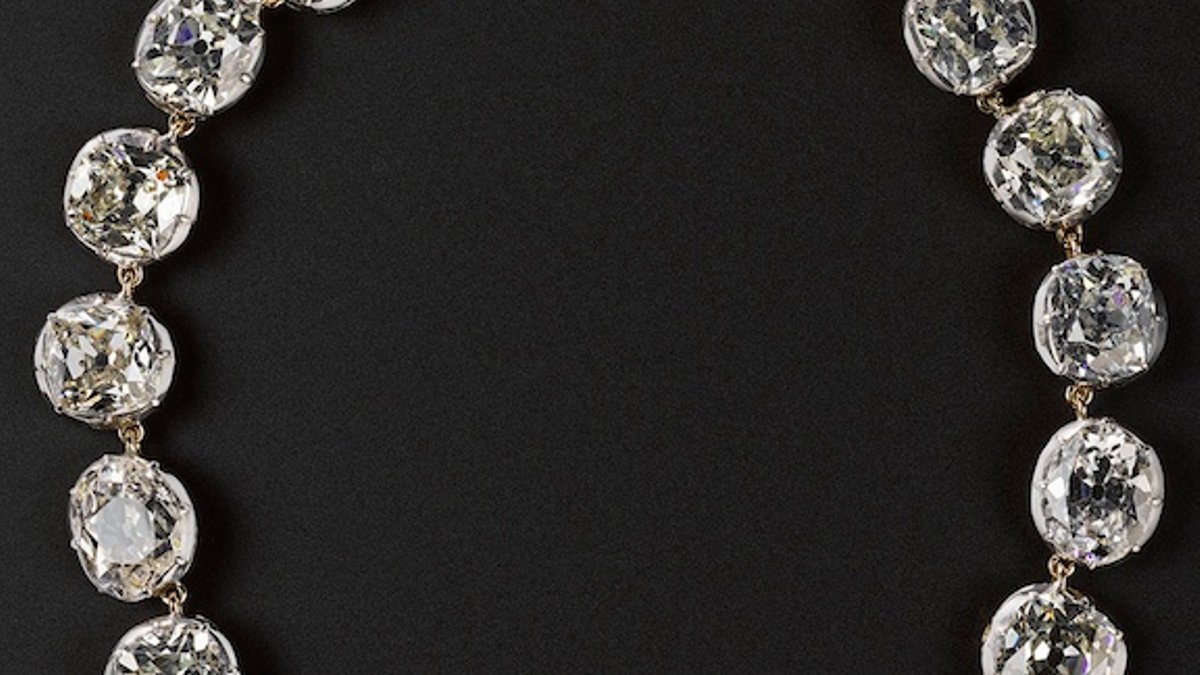
The diamond bracelets command attention like few other pieces of jewelry. Vincent Meylan, a historian specializing in royal adornments, once held them near a window, observing how the afternoon sun transformed the stones into shifting flames. “They might be the finest jewelry pieces I’ve ever held,” said the historian, author, and royal jewelry expert, who had custody of the jewels on several occasions during his research. The set of matching three-strand diamond bracelets features 112 diamonds weighing a total of about 145 carats. In 2021, Christie’s sold the bracelets for $8.2 million, well above the $2 million to $4 million estimate.
Marie Antoinette’s jewelry does more than endure history—it transcends it. The unidentified buyer’s decision reflected more than market value. Rahul Kadakia, Christie’s International Head of Jewelry, described the transaction as driven by “a true passion for history, heritage, and beauty—not merely for bragging rights, but to become a custodian of legacy.”
This phenomenon, now termed the Marie Antoinette effect, explains why her jewels command prices that defy conventional valuation. In 2018, Sotheby’s sold a diamond and pearl pendant for $36 million, a figure 36 times higher than its pre-auction estimate. Andrés White Correal, Sotheby’s Chairman for Jewelry in Europe and the Middle East, noted how the piece’s historical weight transformed bidding into a competitive frenzy. Collectors were not merely purchasing gemstones but acquiring fragments of a narrative spanning revolution, exile, and execution. “We use the term Marie Antoinette effect when bidding goes completely wild because people realize they’re not simply buying a jewel or accessory; they’re acquiring a piece of history,” he explains.
Read Also: Thailand’s Gemopolis Expands to Attract Global Jewelry Makers
How Marie Antoinette’s Style Defied Tradition
Marie Antoinette’s jewelry reflected a taste distinct from the heavy, ceremonial crown pieces worn by her predecessors. Her designs included bow brooches, signet rings, and portrait-adorned rings. A notable example was a double-ribbon diamond brooch featuring a cushion-shaped yellow diamond, while her initial “M” appeared on a ring set in diamonds, a style still influential today. Even her pearl and diamond earrings, now displayed in the Smithsonian’s Gem Gallery, weigh 14.25 and 20.34 carats, an impressive size for the 18th century.
Gabriela A. Farfan, the Smithsonian’s Coralyn Whitney Curator of Gems, documented their journey from Napoleon III’s wedding gift to Empress Eugénie, through Russian royalty, to American heiress Marjorie Merriweather Post. Post acquired them in 1964 and later donated the pieces to the Smithsonian. Their history illustrates a dual nature: both symbols of power and objects of desire.
Most of Marie Antoinette’s jewelry survived because she secretly transported them out of France during her imprisonment. In 1791, hidden in a wooden chest, the collection was sent to Vienna for her daughter, Marie-Thérèse. For 175 years, the pieces remained within the Bourbon-Parma family until 2018, when the family auctioned 100 treasures, including 10 of the queen’s jewels. The sale generated over $53 million, with a single buyer acquiring nine of the ten items. The transaction revealed more than collecting interest; it demonstrated a commitment to preserving historical artifacts.
Read Also: Richard Mille Opens First Thailand Boutique in Bangkok
Controversy Fuels Demand for Myth Over Fact
The Anglesey necklace, sold for $4.8 million in 2024, carries a controversial legacy tied to Marie Antoinette despite her lack of ownership. The necklace, a Georgian-era masterpiece of 500 diamonds, became central to a 1785 fraud involving Jeanne de Valois-Saint-Rémy, who impersonated the queen, and Cardinal Rohan. The scandal falsely linked Marie Antoinette to deceit, yet the necklace’s sale proved that even an unfounded association could enhance its value. The bidding wars highlighted public fascination with the queen’s myth rather than historical accuracy.
In 2023, Christie’s auctioned the Marie-Thérèse Pink, a 10.38-carat pink diamond ring, for $13.98 million. Though direct ownership by Marie Antoinette is unverified, its documented history within her daughter’s collection fueled intense competition. The ring’s new setting, a fleur-de-lis crowning the diamond, strengthened its royal connections, transforming it from a gemstone into a symbolic artifact. Collectors were drawn to the narrative spanning the French Revolution to the Bourbon-Parma vaults, ensuring the ring’s story endured alongside its physical form.
The surviving portraits of Marie Antoinette, particularly the 1787 painting by Adolf Ulrich Wertmüller, reveal a queen whose personal style matched her public image. The portrait, now held by Getty Images, shows her holding her son, the Dauphin Louis Joseph, while her daughter, Marie-Thérèse, stands beside her. Her hands, adorned with rings and a signet bearing her initials, show how deeply her jewelry defined her identity. Even in exile, these details held significance. When she smuggled her jewels to Vienna in 1791, she ensured they carried both material and legacy value.
Read Also: Patek Philippe Expands Bangkok Flagship Boutique at Siam Paragon
Her preference for portrait-adorned rings extended beyond fashion. One such ring, featuring a diamond-encased miniature of her face, was sold as part of the 2018 Bourbon-Parma auction. The piece carried emotional weight as both a fashion statement and a symbol of defiance. After her execution in 1793, the ring became a relic of a woman who rejected the crown jewels of France in her final moments, symbolically distancing herself from the monarchy that condemned her. Passed down through her daughter’s lineage, the ring later resurfaced in public view, allowing its story to be retold.
Legacy Lives On in Fashion and Film
The Victoria & Albert Museum’s 2025 exhibition, Marie Antoinette Style, demonstrates how her influence extends beyond auction houses. Curated with Manolo Blahnik, the show features 250 objects, including the $36 million pearl and diamond pendant and the double-ribbon bow brooch. The exhibit incorporates elements from Sofia Coppola’s 2006 film Marie Antoinette, which portrayed the queen’s jewelry as both extravagant and deeply personal. The film’s pastel sets and opulent costumes mirrored historical records from her lifetime, proving her aesthetic remained relevant across centuries.
Marie Antoinette’s Jewelry and the Affair of the Necklace
A portrait by Adolf Ulrich Wertmüller shows Queen Marie Antoinette with her daughter, Marie-Thérèse, and son, the Dauphin Louis Joseph. The image highlights her preference for elaborate jewelry, which often included diamonds and detailed designs. Her taste for fashionable adornments was widely documented, with many pieces commissioned directly by her.


