


New Zealand’s hidden gems span geology and culture
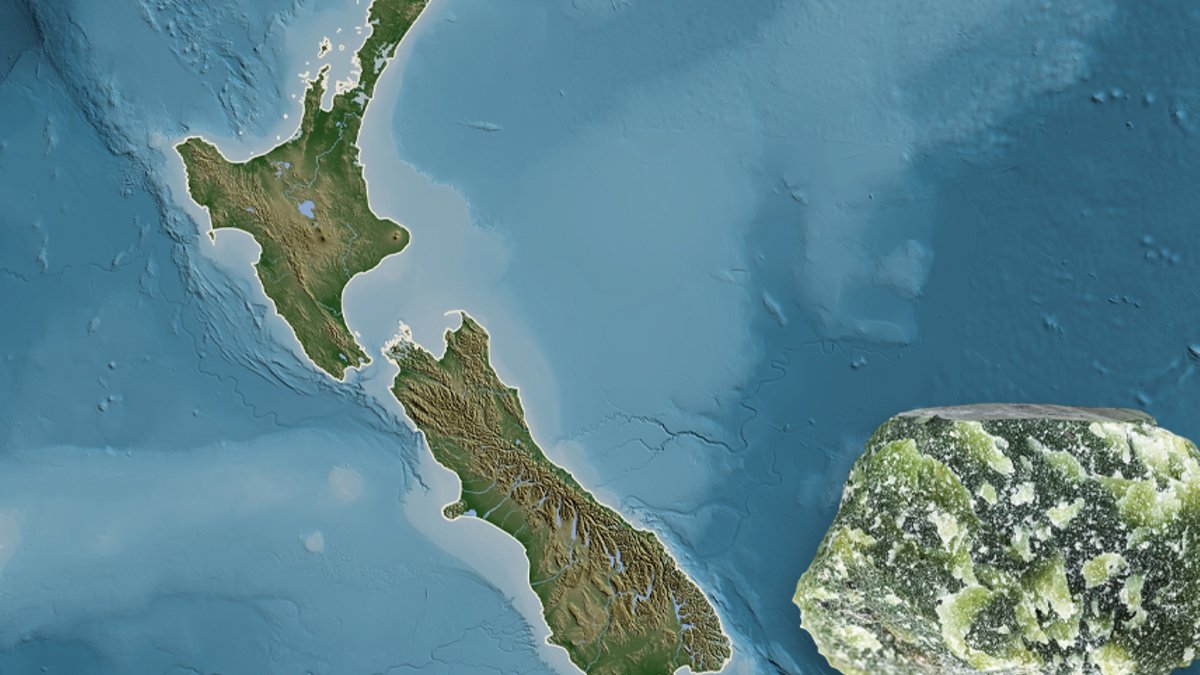
New Zealand’s gemstones tell a story of geology, tradition, and place—one that stretches from the riverbeds of the South Island to the volcanic soils of the North. At the heart of this narrative is pounamu, a term that encompasses several greenstone materials, including nephrite and bowenite. For Māori, pounamu is more than stone; it is taonga, a treasured possession carrying mana, lineage (whakapapa), and a deep connection to the land (whenua).
Unlike Western classifications, Māori distinguish varieties by visual traits, color, translucency, and markings, rather than mineral composition alone. Names like inanga, kawakawa, and kahurangi refer to nephrite, while tangiwai, a highly translucent bowenite, stands apart. Most pounamu is found in the western South Island, where rivers like the Arahura, Taramakau, and Hokitika have long been sources of these prized materials.
The West Coast also holds other surprises. Goodletite, or “ruby rock,” combines ruby corundum with green fuchsite, creating striking red-to-pink patches against a green matrix. Though not faceted like transparent ruby, it is valued by lapidaries for its ornamental qualities. Nearby, the region yields abundant garnet, primarily pyrope-almandine varieties, though most are too included or fractured for gem-quality use. Beyond these, New Zealand’s mineral environment includes natural zircon, beryl, topaz, and scheelite, though high-quality specimens remain rare.
One of the most unexpected finds is precious opal. In 1983, gemmologist R. A. Ball documented its presence in the Coromandel region, describing jelly/crystal opal with spectral color patches, violet iridescence, and a distinctive green “sunflash.” Smaller occurrences have also been recorded on Mayor Island (Tuhua), where volcanic rhyolites produce minute opal displays. While not commercial deposits, these findings highlight New Zealand’s hidden gemological diversity.
Coastal treasures play a key role as well. Paua shell, with its electric blue, turquoise, green, and violet hues, mirrors the colors of New Zealand’s shorelines. Used in Māori carving and modern jewelry, it also yields cultured abalone blister pearls, prized for their intense iridescence. Naturally occurring abalone pearls are exceptionally rare. Other shells, like those from turban snails, periwinkles, and cowries, have appeared in decorative arts, linking New Zealand’s craft traditions to broader Pacific histories.
The country’s ancient forests contribute another layer. Kauri gum, hardened resin from the endemic kauri tree (Agathis australis), ranges in color from pale gold to honey and deeper tones. Though often compared to amber, it is scientifically classified as resin or subfossil resin. Large deposits formed in northern New Zealand’s swamp environments, with some sites dating back 20,000 to 100,000 years. Historically polished into jewelry and decorative objects, remarkable examples are preserved by The Kauri Museum at Matakohe.


